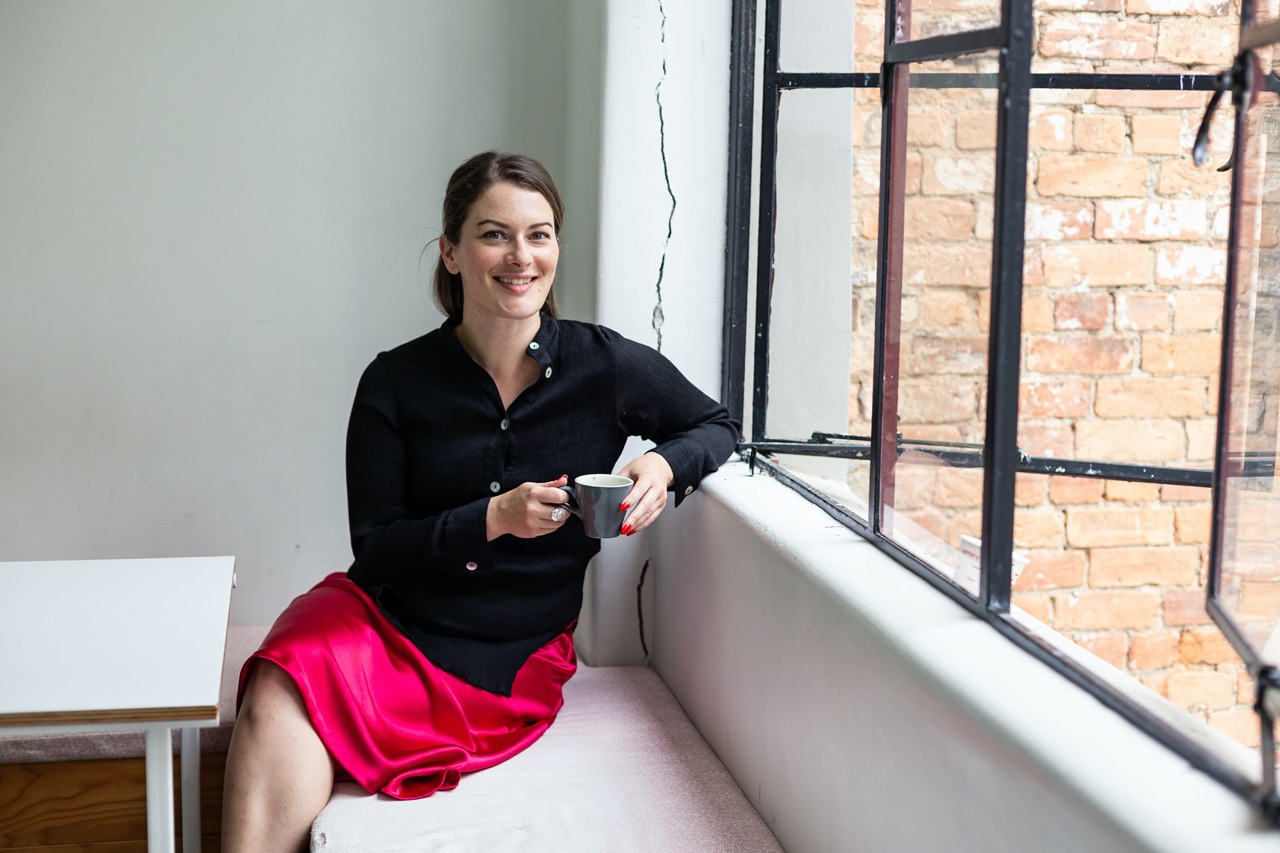
Mariana Alencar is a product marketing professional who has held roles across Brazil, Panama, Mexico, Chile, and Aotearoa New Zealand. Her experience spans technology, SaaS, and AgriTech. We recently sat down with her to discuss her experiences working abroad, her insights into product marketing and agritech, and how marketing can affect real-world change.
Q. What was your experience like working in Latin America? How was the working culture different to Aotearoa?
Every market is different in terms of the culture, what they value, how to connect with people. You’re always going to greet everybody. It's expected of you to say, you know, hello, good morning. Sometimes you hug people, sometimes you give just like two kisses - all these things are expected, even how you connect with customers, how you connect with the people you're working with.
Economically, Latin America is more unstable. Things are changing all the time. Even more when you're working with products that are shipped. They take a long time to arrive in the country. So when you go from ordering to actually having the product delivered, there is a massive gap. A lot of things can happen in the middle.
Sometimes, the economic situation changes, and it becomes way more expensive for you to sell the same product. So you need to make a decision in terms of what to do — are we going to increase the price when you already committed that price to a final customer? This is something I experienced working across Latin America. So when you set up a marketing strategy, you need to be super quick.
Here in New Zealand, the way that we live is more structured. Even though I was working for global companies, every single office had different ways of working. So it's an interesting way of working that sometimes I don't miss much.
I think that a good amount of agility is required in terms of that because you never know what's going to happen, what's going to change, and then you quickly need to adapt the marketing to market conditions, the best you can. You need to just go with the flow, try to adapt as it best you can and make the best decision in the middle of ambiguity, basically.
Q. Can you tell us about some of the key challenges in tech and product marketing?
Product marketing has evolved, and I think it’s still a niche in terms of how we do marketing because it's very in the middle of marketing and product. Product marketers can sit on the product side or under the marketing team. The product marketing function basically translates features and technology into what is the actual benefit for the customer. I feel like the role is basically a lot of working cross-functionally between different areas — customer success, marketing and sales — you're trying to bring them all together.
With the marketing team, we do work a lot trying to understand the marketing strategy — what is the content calendar, what are the core events, and how you can feed the product into that, so you can tell this story about the product - and matching with the marketing team in terms of what the priorities are that they have versus the priorities we have to make sure that customers know about a new feature, or about a new product.
One of the core discussions I have with engineering is in relation to release. It's very different from a market launch. Release - the feature is ready, okay, but another thing, is letting everybody know that this is there and why it is there and how it can help them and what the benefits are for them, right? Sometimes we will have features that we still need to test. And then we can release in a way that they're gonna just try to test, they are not actively promoting it until we feel confident that we have the feature that works and solve the needs of the customers. So, one of the things I try to bring to product marketing is always the customer lens.
Q. Do you have any examples of marketing affecting positive change from your AgriTech experience?
So the thing that I realised about AgriTech that was very different compared to any other industry, is that they are not at their computers all the time. Our target audience is at the farms. And we were targeting farms that were not fully automated. There were farms that people were still going out to check what was going on with the farm, the temperature, the humidity; they needed to do that all themselves - writing it on paper.
...they don't need us with a really clever marketing messaging. They need to gain our trust — and they need a lot of education.
Then I noticed they don't need us with a really clever marketing messaging. They need to gain our trust — and they need a lot of education. They need to know why this is gonna help them and what are the examples, how we can help them to make better decisions, more informant decisions because usually the growers, they have been doing that for a long time. And they rely a lot on their gut feeling. But with climate change, that gut feeling, it's a tricky one. Because the weather is changing all the time and really fast. For the grower, it's a massive implication if they have a heat wave, for example, and they're going to lose a lot of crops. So knowing and using technology to understand really well the weather and what's happening in the farms in real time makes a big difference for them. So with that, a lot of that I have done in was first educating them, trying to create materials and content that was first bringing this awareness of how tech can be useful for them to adapt and be more resilient due to all the changes that we are going through.
The other part would be, as well, the human aspect of what they do. I appreciate a lot, understanding how thing actually work for them, because it's so much more complex than we think. There's a lot going in their world for them to stop and think about what you're offering. It blows you away sometimes when you get to have that face to face with the in customer. I had the opportunity and it was amazing to go to Morocco, meet them in person, have chats with them, see how they're using the tech, and understand their personal stories as well.
Coming back to your question, well, it helped them to save water, which is such an important resource. In Morocco they were going through so many years of not having water at all. So they had to build completely new systems, using water from the ocean. So having this technology could enable them to see how much water they are saving if they are tracking everything, to understand the problem.
Q. Moving forward, what would you like to see change in the marketing industry?
There's a lot of hype in terms of AI, and AI replacing marketing. Let's be honest, that's not gonna happen anytime soon. It can help. It can be enabler, but it doesn't replace the work that we do. It’s not going to tell you if the scope of your strategy is quite broad or if your writing connects with the customer. I know ChatGPT can help with that to some point. But, it takes some time. And I feel like we can forget that we’re humans and people connect with people.
Q. Any final thoughts?
Let's see. Well, I think we are in an interesting moment right now with the AI hype. I see it in a positive way that enables us as marketers to use different tools and experiment and try new things. I have this impression marketing is changing a lot, even though the fundamentals are the same, how you do marketing is changing a lot. So, the message for us is keep learning, keep flexible, learn from others, and see what people are doing there without getting lost into the hype.